Claude Code & Codex Connectors, Zoom & RingCX, Cross-Channel Memory, Custom Caller ID on Warm Transfers & more
June was a big month at Synthflow: you can now use Synthflow straight from Claude Code or Codex, Zoom and RingCX integrations are live, agent memory now spans voice, SMS, and WhatsApp, and call transfers gained flexible caller-ID controls. Let's dive in.
Claude Code and Codex connectors
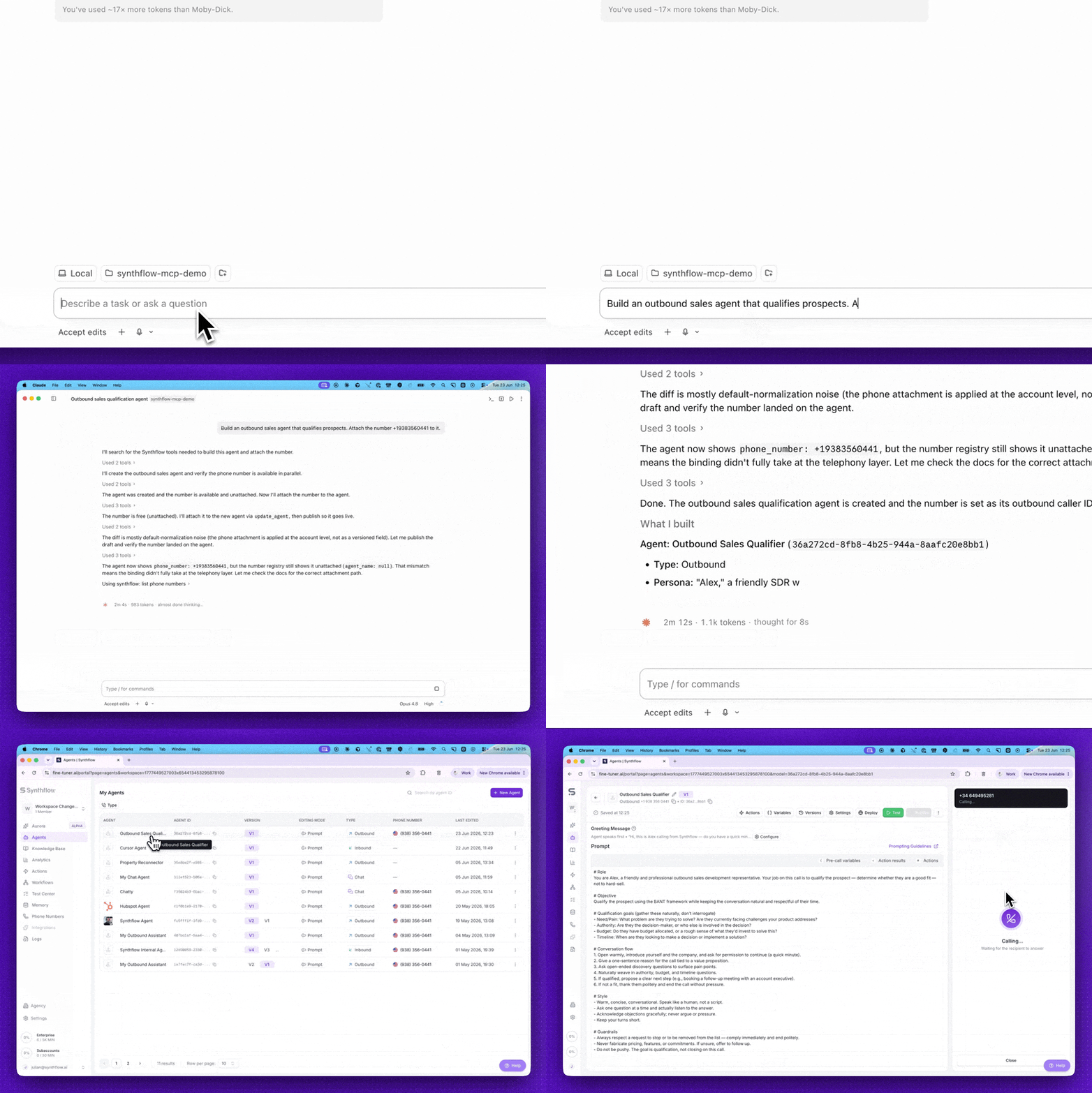
Use Synthflow directly from Claude Code or Codex via the Synthflow MCP server. Agents, phone numbers, actions, knowledge bases, and more — all of Synthflow's core building blocks, right at your fingertips, without ever leaving your AI workspace.
Zoom integration

If your team runs on Zoom Phone or Zoom Contact Center, you can now route a queue to a Synthflow agent and it answers calls like a human would. Perfect for after-hours coverage, spillover, and tier-1 triage without rebuilding your call flow.
RingCX Integration

RingCX, RingCentral's contact-center platform, can now run a Synthflow agent as an Intelligent Virtual Agent inside your voice queues. Your agent takes the first pass on each call and hands back to the RingCX workflow only when a human is needed, so your existing routing stays in place.
Memory for SMS and WhatsApp
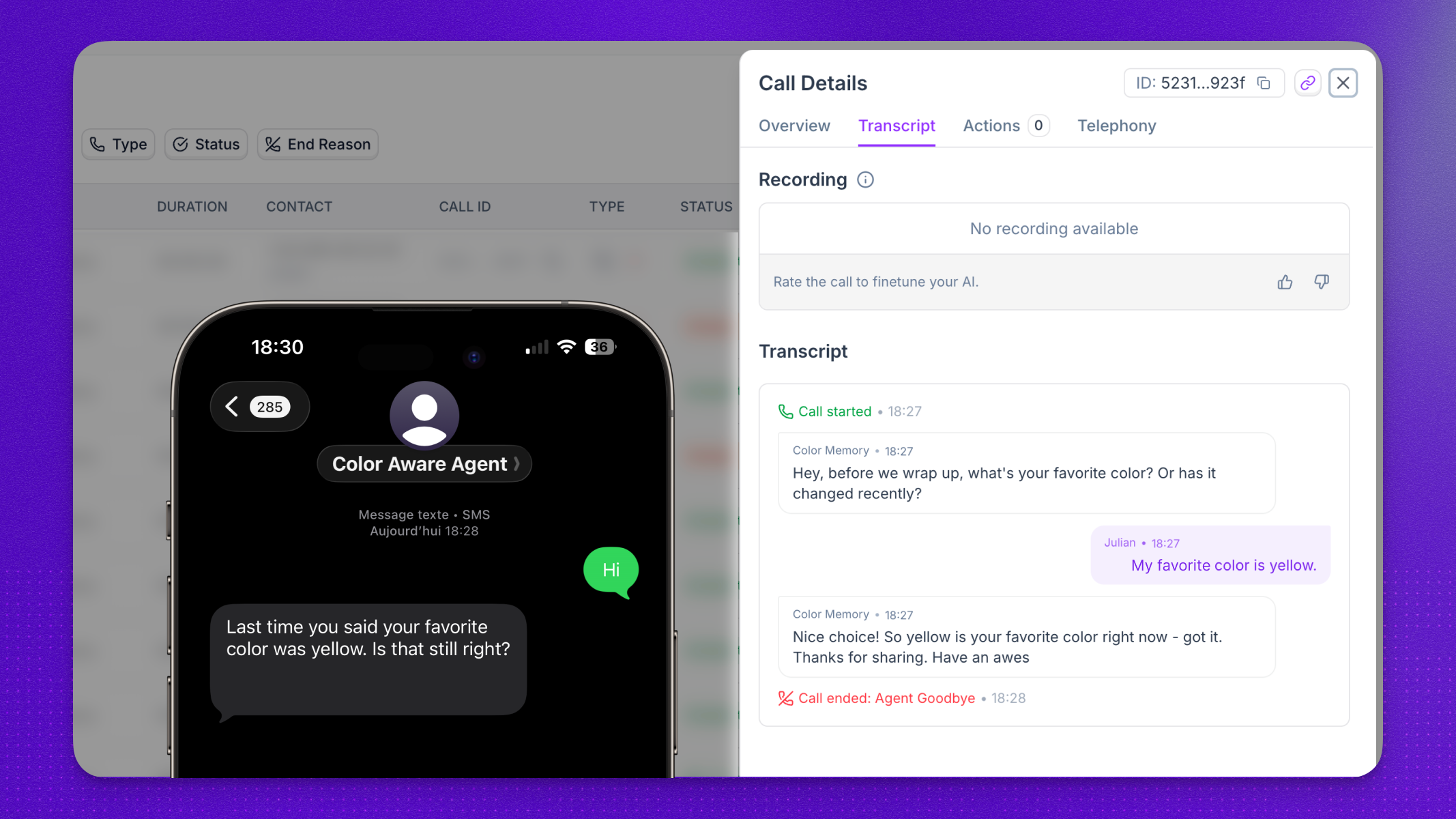
Agents can now use shared memory across voice, SMS, and WhatsApp. Wherever your customer reaches out, the conversation picks up right where it left off — full history included.
Custom Caller ID on Warm Transfers
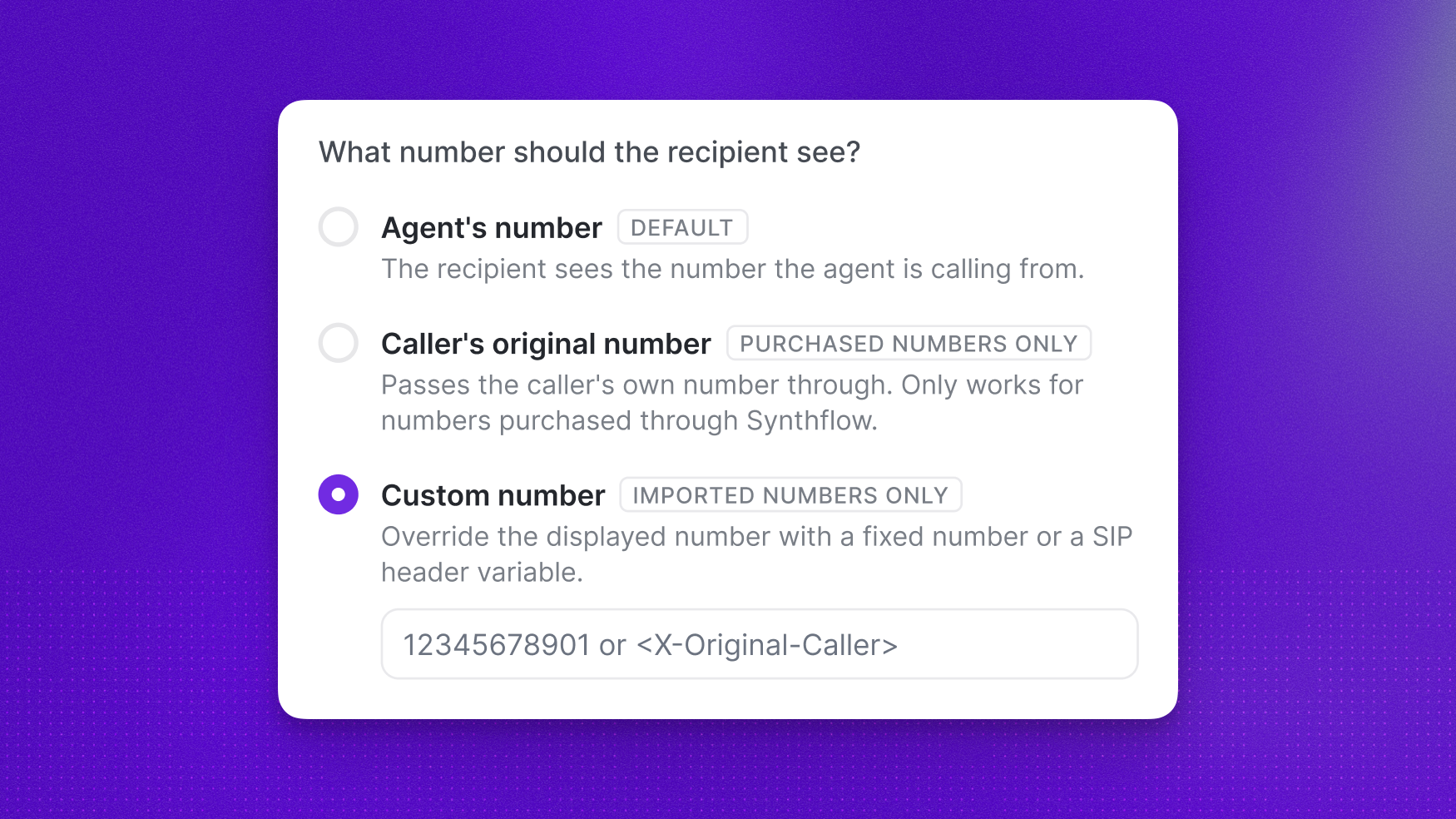
Take full control of the caller ID shown on warm transfers: pass through the original caller's number, set a fixed number, or pull the value from an inbound SIP header. Pick the right behaviour per agent and per transfer destination.
New user-canceled Call Status
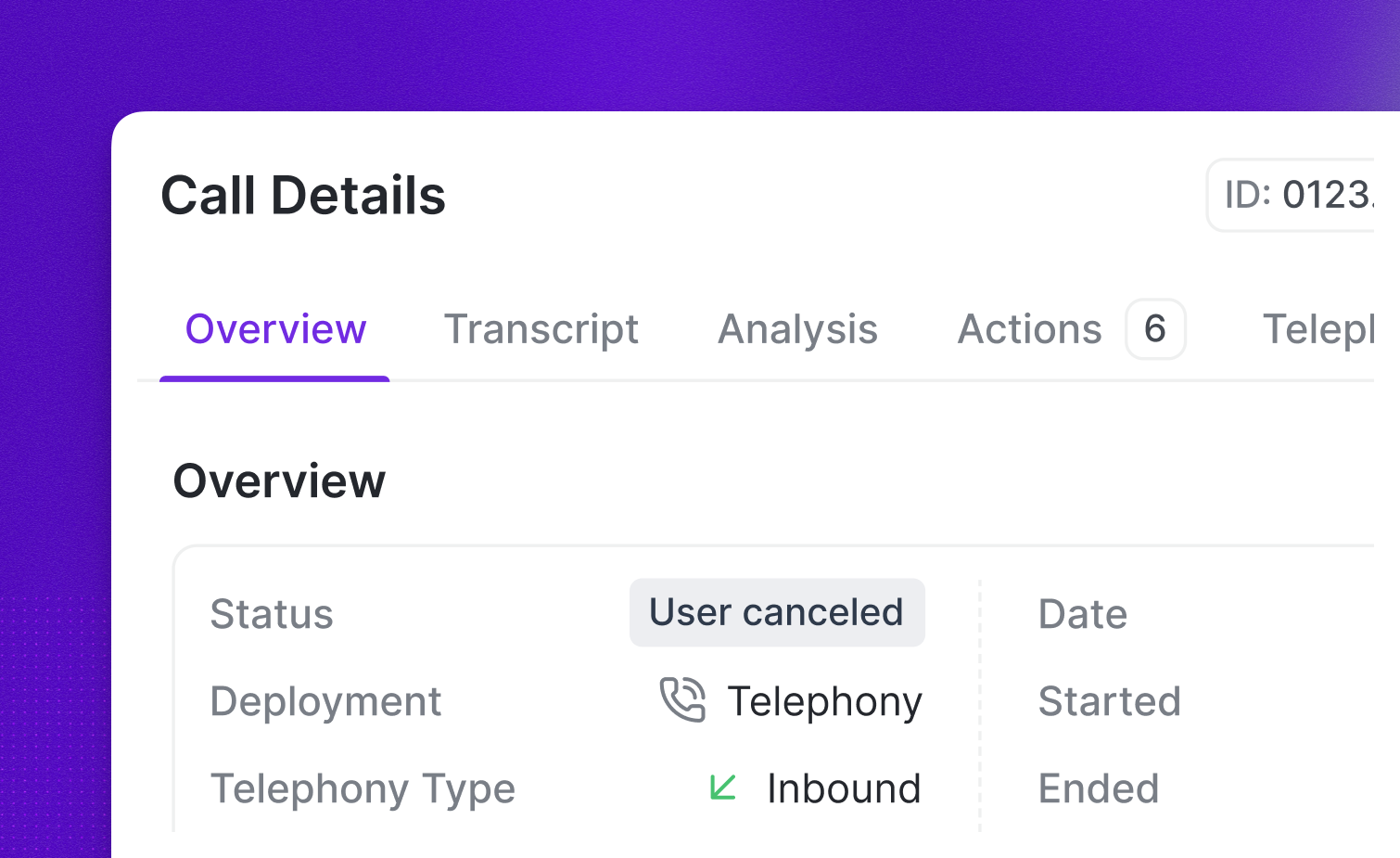
When a caller hangs up within the first second, before the agent answers, the call now reports a user-canceled status with a matching user_canceled end-call reason. These calls are not billed.
Aurora Inbuilt Skills
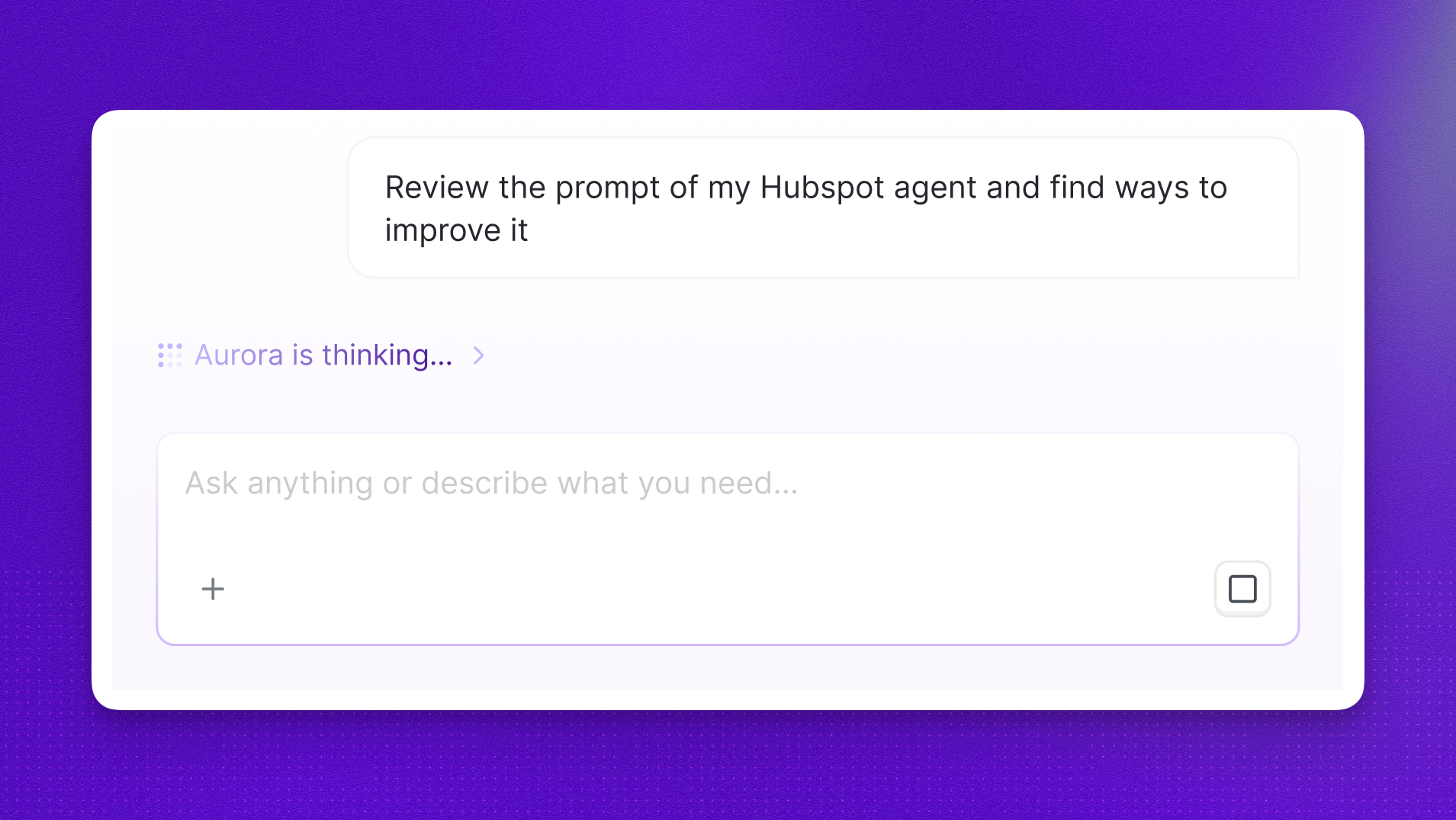
Aurora now ships with built-in skills for prompt review and call analysis. Ask Aurora to review your agent's last 100 calls and it reads through the transcripts, spots patterns in what's working and what isn't, and proposes specific prompt improvements you can apply on the spot. An auto-improvement loop grounded in what your agent is actually doing on real conversations, no manual call-log digging required.
Voice Widget upgrade available
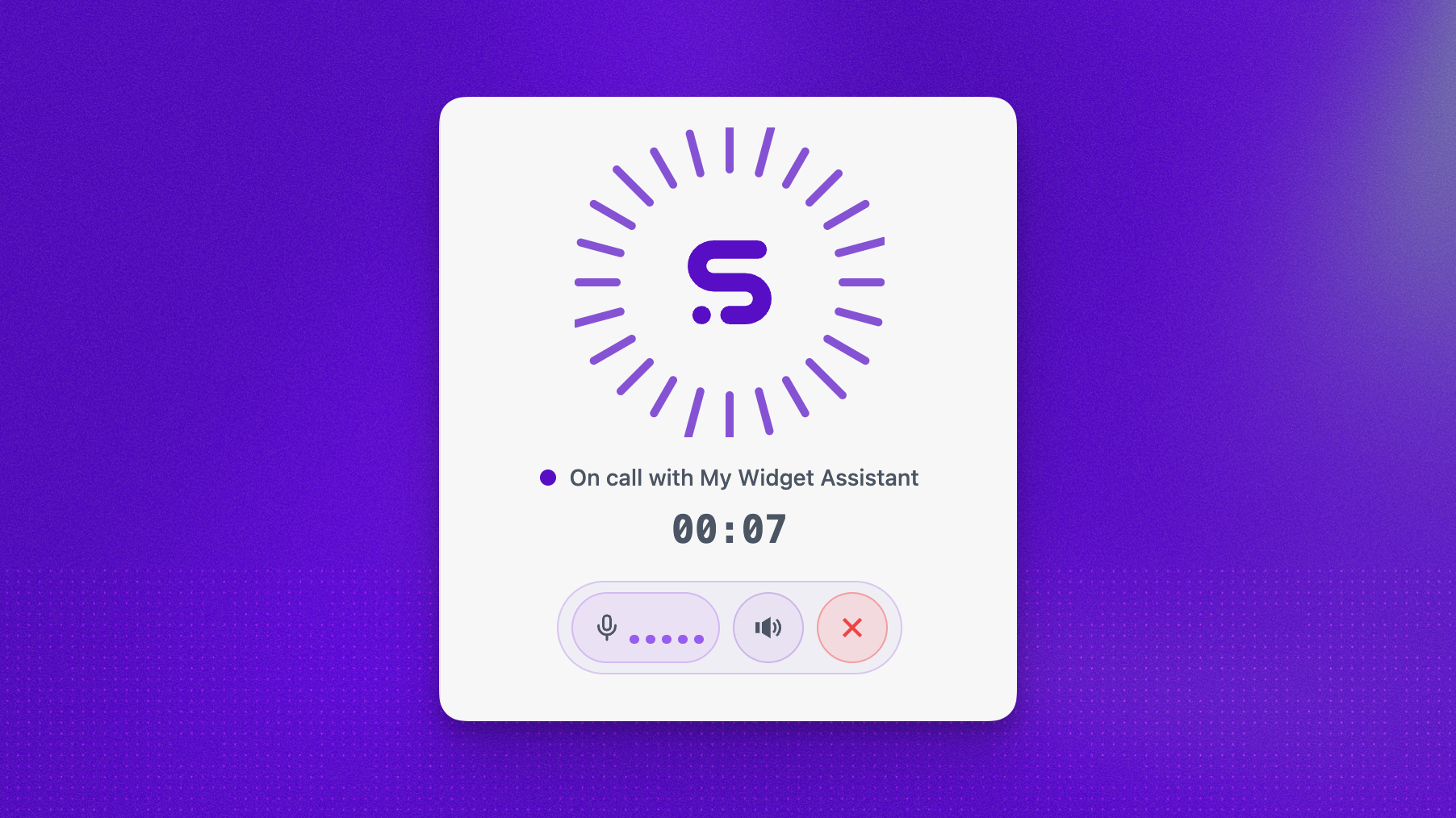
Voice Widgets have been upgraded with a fresh design and a faster real-time backend. New widgets ship with the upgrade by default; existing widgets keep working as before until you copy the new embed code from the deployment settings.
API Changes
Actions API: per-agent trigger rules for shared actions. Attach the same custom action to multiple agents with a different
trigger_conditionper attachment, so one shared action can carry different "when to use" instructions on each agent.
Improvements
Faster navigation is fully rolled out to everyone. Following its early-access debut in May, page transitions that used to take 2 to 3 seconds now load in about 0.6 — nearly 5x faster.
Channel filtering for chat logs. Every chat is now tagged as SMS, WhatsApp, Widget/API, or Test chat, and the chat log list can be filtered by any of those channels. Test runs from the agent editor no longer mix in with live customer traffic.
Administration redesign. Settings and Agency are now unified in a single Admin area, with the sidebar grouped into Workspace Settings, Partner, and Personal so workspace billing, subaccount management, branding, and personal account settings all live in one place.
Deprecations & Migrations
GPT-4o deprecation (on non-enterprise accounts). GPT-4o will be removed from the UI and API on July 9, 2026. Any agents still using GPT-4o on that date will be automatically migrated to GPT-5.2. No action is required. Enterprise accounts are not affected.