New in Synthflow: Multi-Agent System and Comprehensive Logs
We’re wrapping up the week with a new release, and it’s packed with improvements inspired by how teams like yours use Synthflow every day.
Build Multi-Agent Systems starting with Subflows, which make every part of your flow modular, reusable, and powered by specialized agents.
The new Logs are your one dashboard where you can see all calls from your agent workforce. Inspect call recordings, API calls, and webhooks in one view, making it easier than ever to trace, debug, and stay on top of what’s happening in real time.
Find out more below.
Advanced Flow Designer Updates
Create Multi-Agent Systems with Subflows
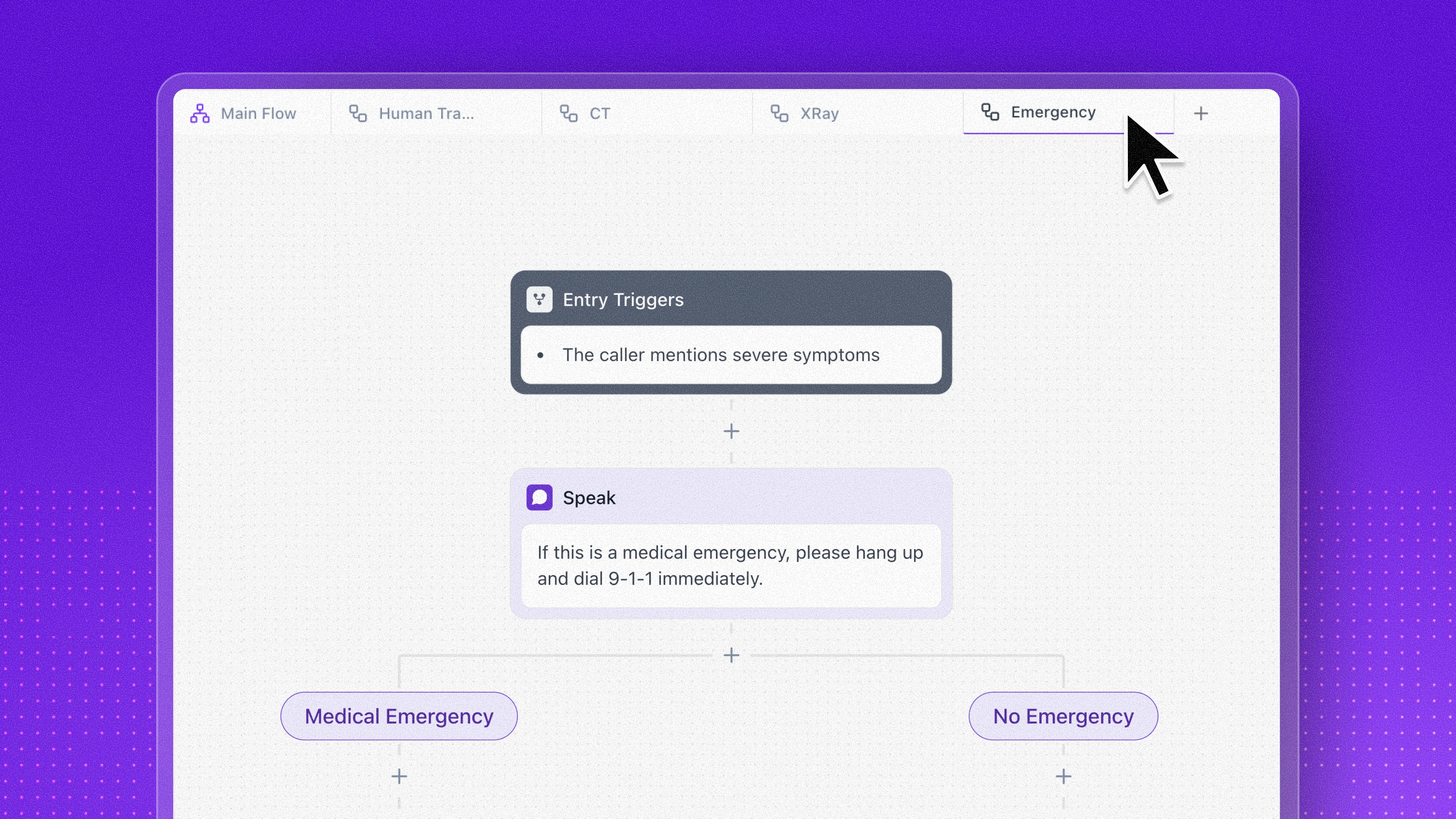
Subflows are a fundamental component of the Multi-Agent System, helping you organize and modularize your conversation graph. Each subflow acts as a specialized, reusable agent that can be activated by a specific intent or event.
For example, you can define a trigger such as “The caller mentions severe symptoms.” Whenever this intent is detected, the main agent delegates that part of the conversation to a subflow designed to handle this scenario. Once the subflow completes its task, control returns seamlessly to the main agent at the point where it left off.
By structuring logic this way, the Multi-Agent System remains scalable and maintainable. Subflows enable better collaboration between agents, simplify complex interactions, and promote reusability across different conversational contexts.
Natural Language Branching
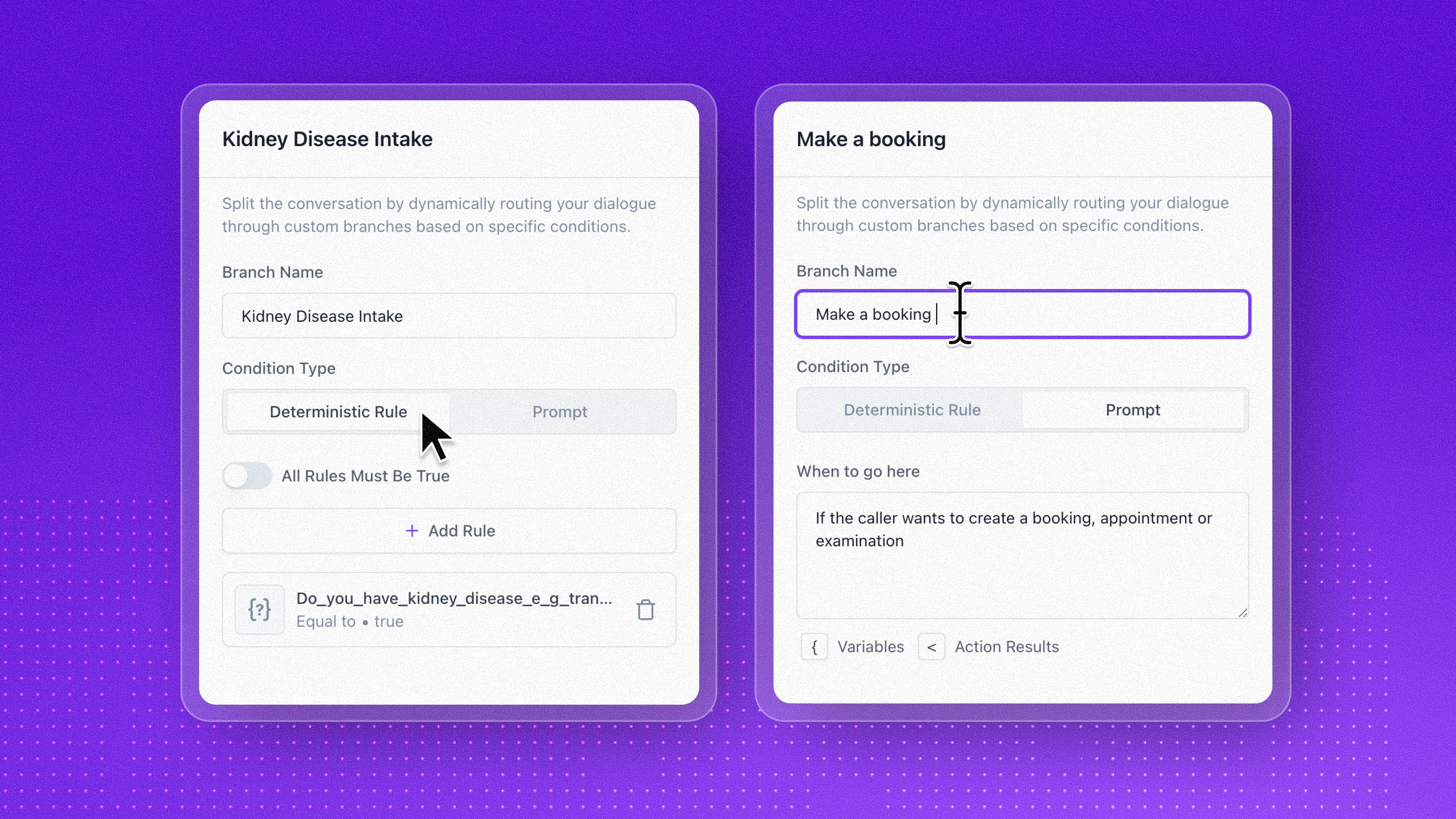
Advanced Flow Designer now allows branching transitions based on natural language conditions in addition to logical conditions. The agent can now evaluate natural language conditions before moving nodes, enabling more nuanced, context-sensitive branching based on conversation content and user sentiment. This makes the agent more flexible and intelligent.
Variable Type Support
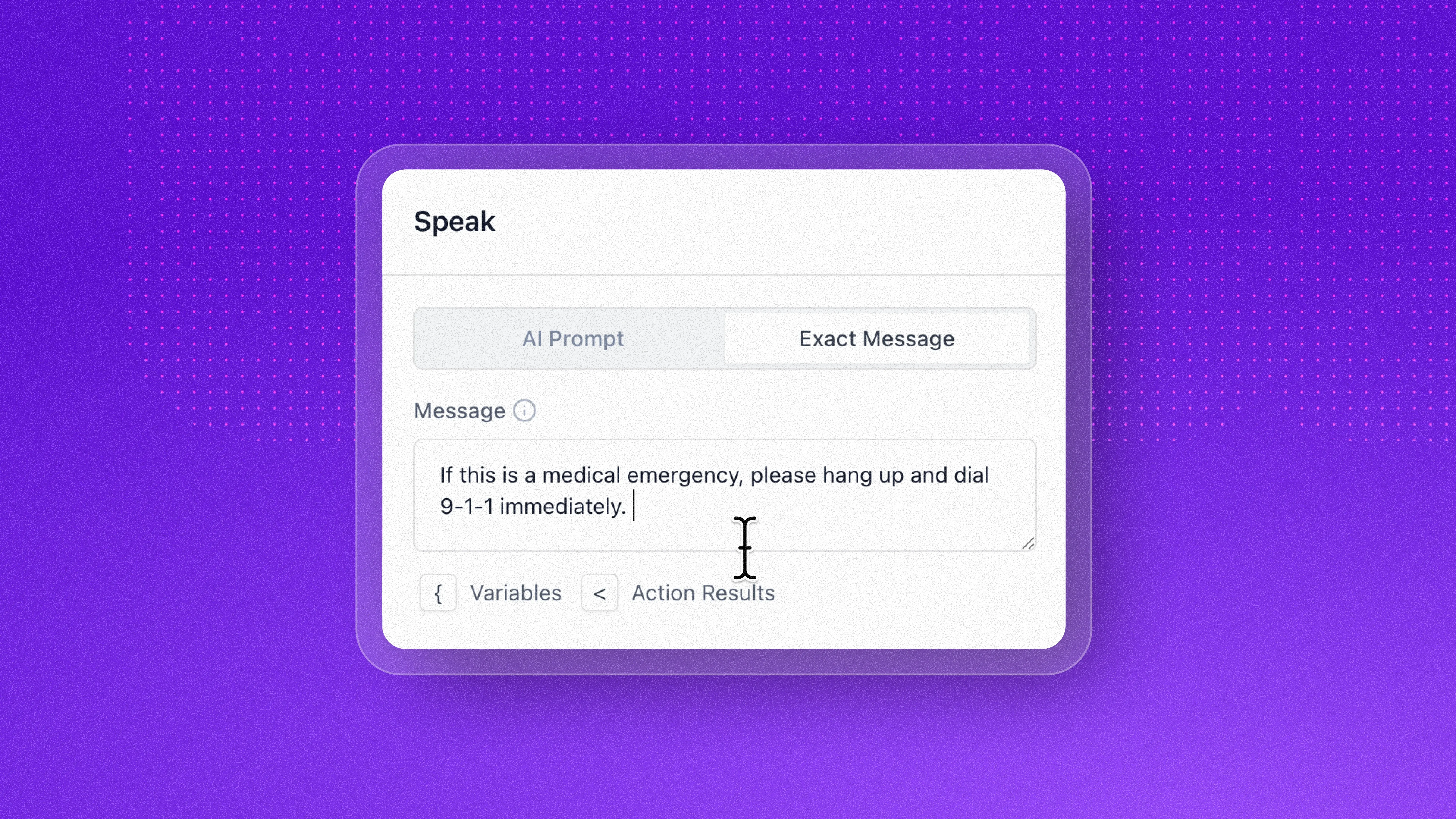
Flow Designer now supports enum variable types, allowing you to create dropdown-style variables with predefined options. This ensures users can only select from valid choices, improving data quality and reducing input errors in your conversation flows.
Enhanced Message Control
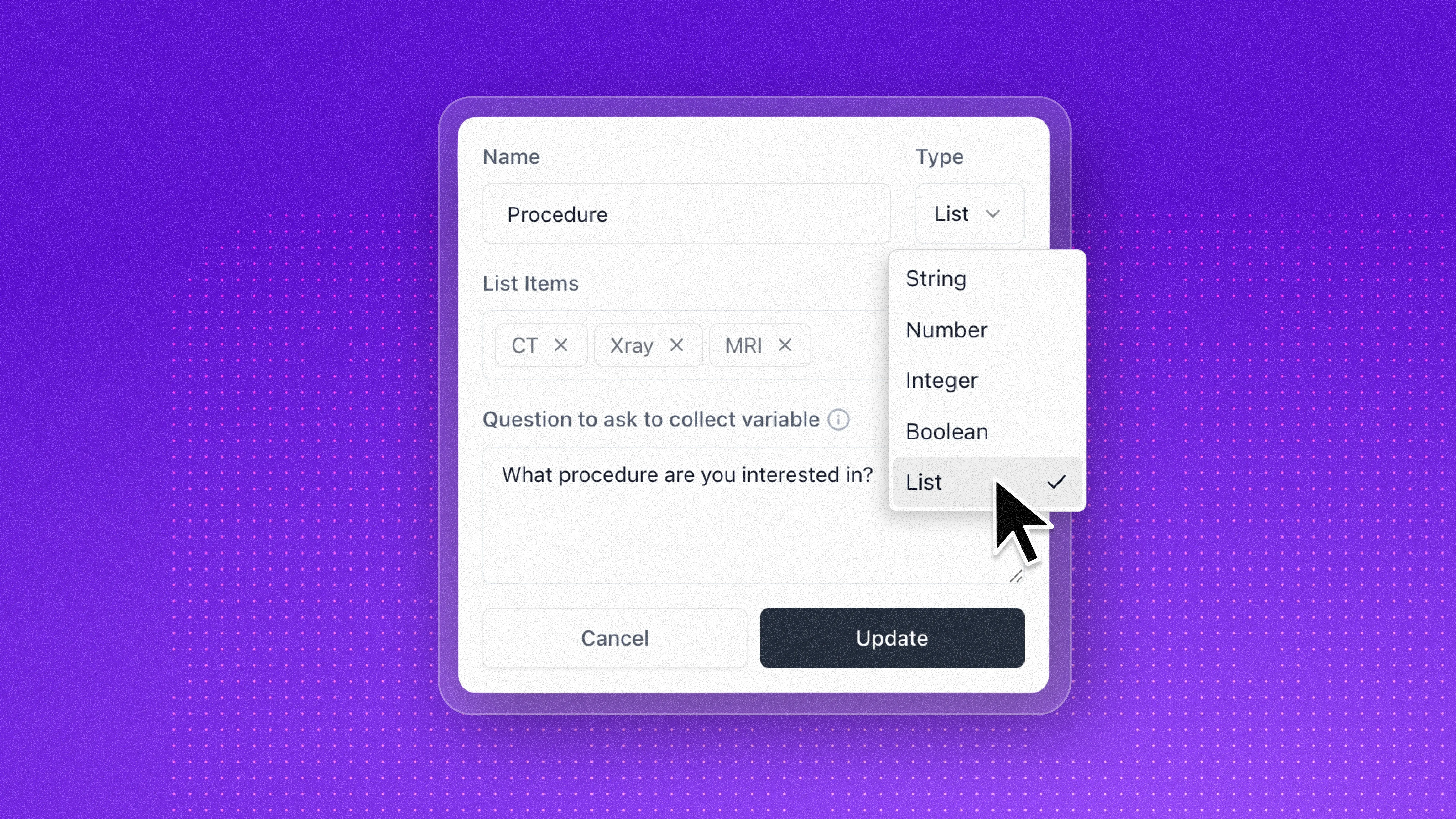
Within the Speak node, you can now ensure messages are delivered exactly as written, bypassing AI generation for compliance-critical or sensitive communications. Approach with confidence scenarios where regulatory or safety requirements demand precise phrasing. For example, when a caller mentions severe symptoms and the Agent must not triage but instead redirect the caller to emergency services using a compliance-approved message.
Comprehensive Call, API, and Webhook Logs
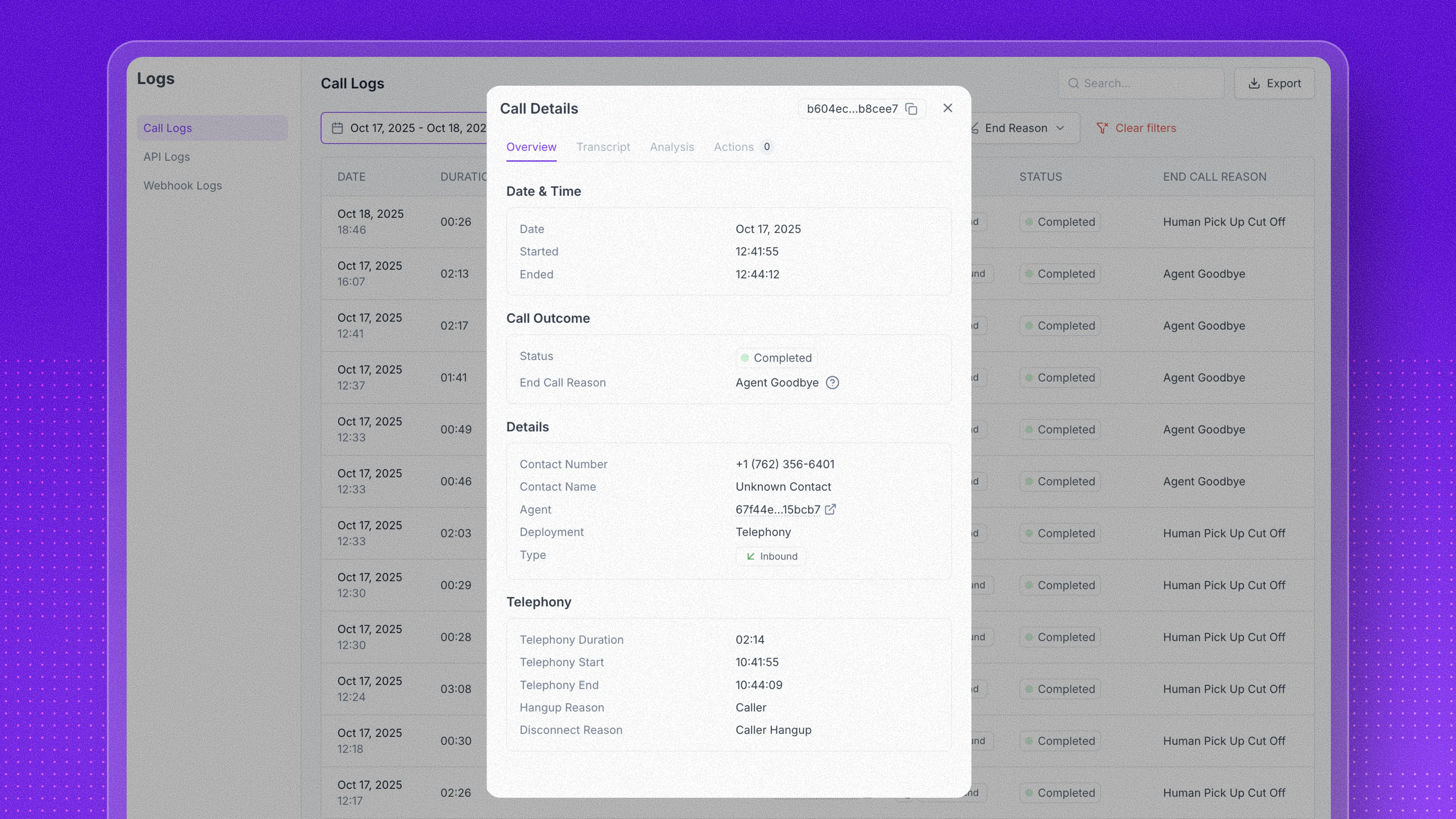
Synthflow now provides a unified logging system that gives you complete visibility into all your voice agent operations. Access detailed logs for calls, API requests, and webhook interactions from one centralized view.
See full call transcripts and metadata, audit every API request with request/response details, and monitor all webhook deliveries with real-time outcomes and retry tracking. Powerful filtering, search, CSV export, and detailed drawer views make it easy to debug agents and analyze performance.
Telephony Features
Call Transfer to SIP
Agents can now transfer live calls to SIP destinations (PBX systems, SIP phones, softphones). This enables outbound-to-internal handoffs and real-world escalation workflows like SDRs warm-transferring prospects to AEs, support agents escalating to specialists, operators routing calls to departments, or healthcare and legal teams handing off callbacks to internal providers.
LATAM RTP Engine
Multi-region RTP engine support for Latin America, providing improved call quality and reduced latency for users in Latin American markets through localized RTP infrastructure.
API Updates
Call List API Enhancements
We added more filters and improved get list calls public API, providing enhanced filtering capabilities and better performance for retrieving call data through our public API endpoints.
Action API Enhancement
Send call ID and model ID with action API for better tracking, providing enhanced traceability and debugging capabilities for custom actions by including call and model context information.
More Features
Nova3 Transcription Support
Switched to state-of-the-art Nova3 model for German and Spanish languages to provide natural, accurate, state of the art speech transcription. Nova3 will be used by default for German and Spanish language.
Salesforce for Subaccounts
Enterprise customers can now enable Salesforce for their subaccounts. This allows subaccounts to connect their own Salesforce accounts and create custom actions directly within the platform — giving each team more flexibility and control over their CRM workflows.